Skip to content

Money Spread AI Video Generator

One character photo enters a room that already holds the stacks and the fan of bills. The portrait does not need money in it. The scene supplies the cash.

Create a video

Character photo

One person, a room, and bills that stay

A single performer stands in a bedroom, lifts banded stacks toward the lens, and then opens the bills into a wide fan that covers the lower half of the face. The ceiling fan, the lamp, the bed, and the cash are already in the performance. Money Spread AI asks for one character photo and uses it for the face, hair, body, and clothing. You do not photograph the money, restage the room, or add a second person. The bills are props in a fixed scene, not a statement about income.

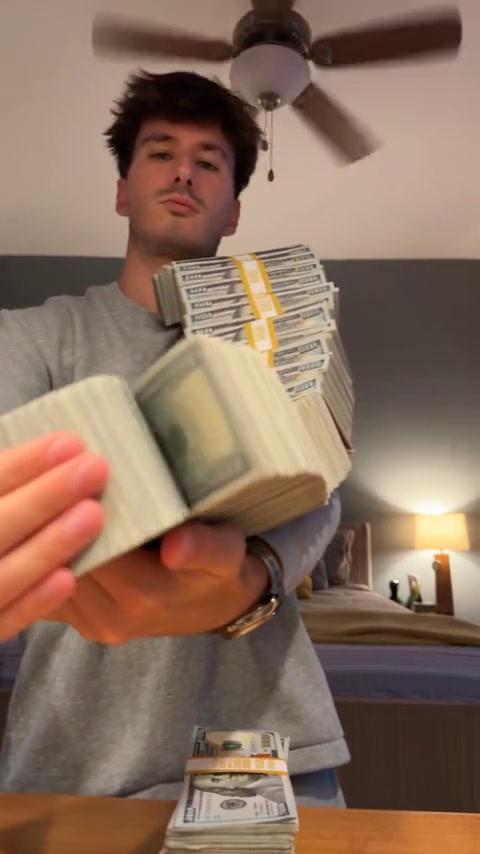
Community example of a grey sweater in the money-spread scene

Bring one character into the room

  1. 01

    Choose a single clear portrait

    Upload one person with the face, hair, body, and clothing visible. A sweater, a jacket, or a plain shirt is enough. The photo does not need cash, a fan of bills, or the bedroom behind them. Skip group shots. You need permission for the person in the picture.

  2. 02

    Leave the money in the scene

    Stacks on the table, banded bundles in the hands, and the fan of bills are already part of the performance. Do not composite currency into the portrait to help the scene. Extra bills drawn on the photo can confuse the hands. The room, not your still, owns those props.

  3. 03

    Confirm resolution before generating

    There is no prompt box here and no second photo slot. Pick a resolution in Settings and use the credit estimate that matches it, because credits depend on resolution. The clip is about 15 seconds. The original soundtrack is added from the performance. For your own prompt or video, go to /video.

What Money Spread AI changes in the room

One portrait joins a finished room

The performer is centered under a white ceiling fan, with pale walls, a lamp, and a dark wood bed behind them. That geography does not come from your upload. The character photo replaces the person from the opening look down to the moment the bills rise. Hair, skin, build, and clothes travel together from that one image.

A waist-up or full-torso picture is more informative than a distant full-body dot or a crop that cuts off the chin. The camera spends time close to the hands and the face, so the outfit around the chest and sleeves will show. One person only. A friend at the edge of the frame is not a supporting role.

The stacks are already on the table

Thick stacks sit low in the foreground before they are lifted. Some are loose, some are banded, and the performance moves them toward the lens in a set order. Those stacks stay scene props. Your photo is not asked to include them, match their color, or show a hand already gripping them.

Because the money is pre-timed, a portrait of empty hands is normal and correct. The performance supplies the grip. Watch whether the fingers stay outside the paper and whether a stack merges into the sleeve. That contact is a review point, not something you fix by drawing bills into the still.

Community example wearing a cream jacket among the bills

A fan of bills is part of the scene

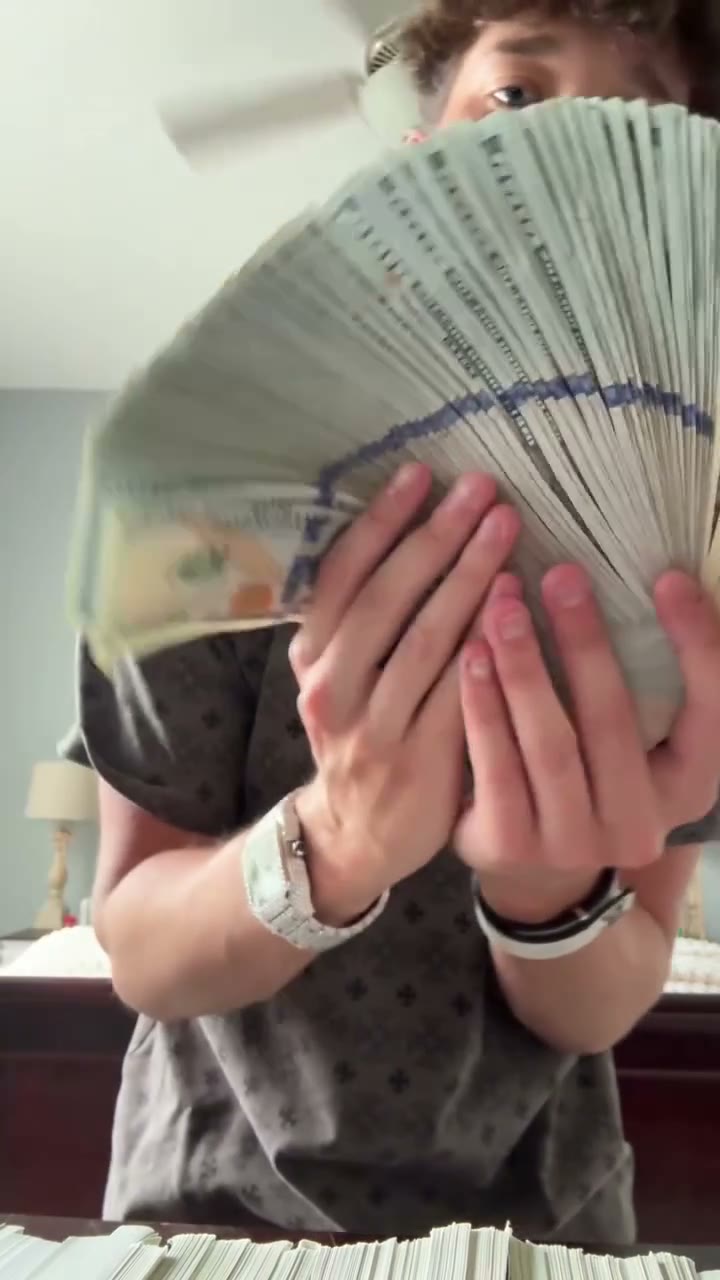
Later the bills spread into a fan that fills the lower frame and hides the mouth. The eyes may remain visible above the paper. That fan is already choreographed. The character photo does not pose it, choose how wide it opens, or decide which bill faces the camera.

The fan is also where likeness is hardest to judge, because the face is partly covered. Check the seconds before the fan rises and the sliver of face above it. If the hair or the shirt changes when the paper comes up, the portrait may need a clearer outline, not a picture of cash.

No cash is required in the photo

A school portrait, a mirror photo, or a plain standing shot can enter this room. Currency in the background of the still is unnecessary and can compete with the stacks that already exist. If your photo happens to include a wallet or a coin, do not expect those objects to replace the fan of bills.

The same rule applies to text. A caption, a price tag, or a screenshot of a balance is not a prop the scene knows how to hold. Use a photograph of a person. The performance will keep its own bills, its own table, and its own timing for about 15 seconds.

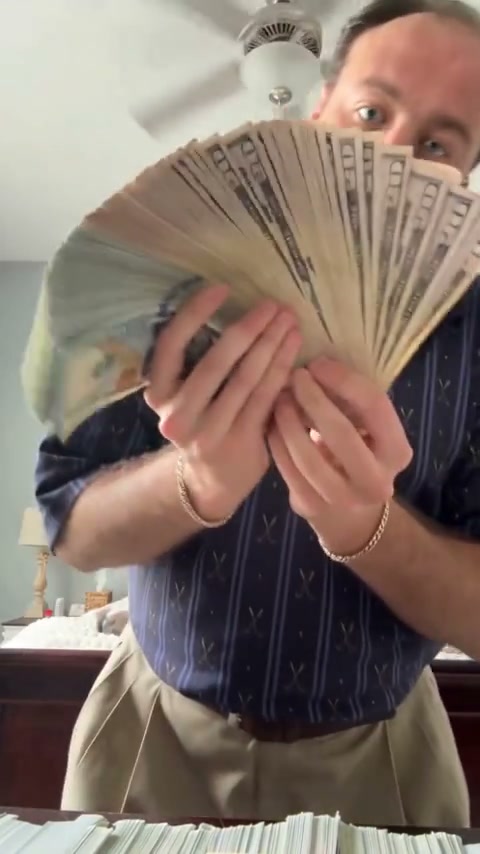
Community example in a navy shirt holding the source stacks

Sweaters, jackets, and shirts can all enter

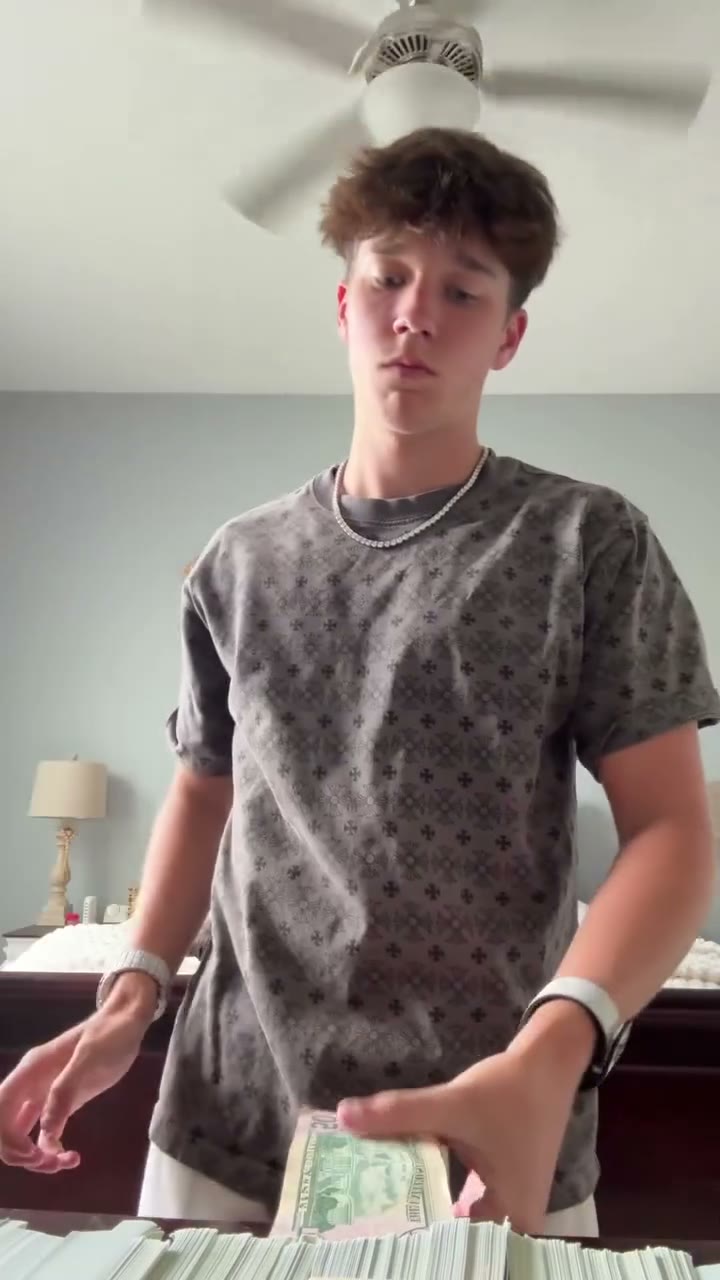
The source performer wears a grey patterned tee and a light chain, but that outfit is what your photo replaces. A grey sweater, a cream jacket, or a navy shirt can each become the clothing in the room, because the character photo carries the garment. Choose the outfit in the still, not in a written note.

Fine logos, tiny prints, and transparent fabric are easier to smear when the arms move. Solid knits and structured jackets usually read from the first frame through the fan. Jewelry on the neck or wrists should be visible in the photo if you care about it. The scene will not add a chain you did not show.

The grip is the hard part to review

Hands wrap the stacks, thumbs press the paper, and both wrists come forward as the fan opens. The portrait gives the arms and the sleeves. The performance gives the gesture. Those two have to meet without melting the fingers into the bills or duplicating a hand.

Look at the contact frame by frame if the first glance seems fine. A watch from your photo should stay a watch, not a smear, when it passes the edge of a stack. If the hands fail while the face looks right, try a photo with bare, unobstructed forearms rather than a different room. The room is not the variable.

Frame of the character before the bills move toward the camera

Props are not a financial claim

The cash, the stacks, and the fan of bills are staging. They do not show income, a payment, a prize, or a gambling outcome, and the clip should not be presented as any of those. Nothing on this page calculates wealth or promises a return. It only places one permitted person inside a performance that already handles prop money.

Do not upload a portrait in order to imply that the person earned, won, or owes what is on the table. The bills stay fictional props tied to the source timing. If a scene about an actual transaction is what you want, it is a different video, and it starts with your own prompt on /video.

The room ends when the performance ends

About 15 seconds covers the lift, the approach to the camera, and the fan. There is no extra beat for a caption, a second outfit, or a walk out of the bedroom. The ceiling fan, lamp, bed, and wall color remain for the whole clip. Your photo does not redecorate them.

The original soundtrack is added from the performance. The portrait does not bring a narration or a new voice. Credits depend on resolution, so the number beside the current resolution is the cost to read. Generate only when the single character photo is the person you mean, used with permission, and expect small differences from take to take.

Frame of the bills spread into a fan in front of the character

Money Spread AI: your questions answered

How many photos does the bedroom scene take?

One character photo. It supplies the face, hair, body, and clothing. The stacks, the loose bills, and the fan are already in the performance. There is no second slot for a friend, a room, or a pile of cash.

Does my photo need money in it?

No. The photo does not need money. A normal portrait is the right input. Adding currency to the still is unnecessary, and it can fight with the bills the scene already moves.

Does the clip mean the person has that cash?

No. The bills are props in a fixed performance. The result is not income, not winnings, and not a gambling outcome. Do not present it as a financial fact about the person in the photo.

Can I change the bedroom or the ceiling fan?

No. The room, the bed, the lamp, the fan, and the camera stay. The portrait changes the performer. A different set or a written direction belongs on /video.

What should the character photo show?

One person, with face, hair, and clothing clear enough to recognize. Sweaters, jackets, and shirts can all enter. Avoid a group, a heavy face filter, and a crop that removes the shoulders. Use a person you have permission to depict.

How long is Money Spread AI, and what sets the credits?

About 15 seconds. Credits depend on resolution. The original soundtrack is added from the performance, and this page has no prompt editor. A direction of your own belongs on /video. Hands, stacks, and the fan can shift. Results vary, so review the whole clip.

Send one portrait into Money Spread AI

The stacks and the fan of bills are already waiting. Bring one permitted person: face, hair, and clothing.

Try Money Spread AI